Grading Contractor Serving Western North Carolina
Rough grading, finish grading and resloping that puts water where it belongs and gives you a surface you can build on.
There's a difference between a property that sheds water and one that fights it every spring, and it usually comes down to grading. We cut building pads, driveways, yards, pastures and commercial sites across Burke, McDowell, Rutherford and Buncombe counties, setting slope on purpose so runoff actually leaves the way you want it to.
Nine times out of ten, the drainage call we get is really a grading problem wearing a different hat. A pad cut a hair off. A yard that quietly falls back toward the crawlspace. A driveway with no crown left in it. Getting the grade right the first time costs a fraction of what it costs to chase the water down later. Ask anyone who's tried.
Why AllTrax
Why work with us on grading
Set to a plan, not by eye
We work to real elevations and consistent slope, so the finished surface drains the way it's supposed to instead of leaving low spots that pond after every storm.
Drainage isn't an afterthought
Where the water goes once the site's graded gets planned with the cut, not argued about after. Swales, crowns and outfalls all get sorted up front.
We've worked this ground for years
Slope, red clay, heavy seasonal rain: that's just Tuesday around here. We build grades that hold up to it.
Equipment sized to the job
Compact machines for a tight residential lot that don't tear up everything around it. Real capacity when the site calls for moving actual volume.
A finish you can build on
Finish grading done to tolerance, so whatever goes down next (concrete, gravel, sod, paving) sits on a true surface instead of fighting it.
Scope of work
Our grading services
Everything below is handled by our own crew and equipment.
Building pad grading
Cutting and compacting a level, properly drained pad for a house, garage, shop, barn or modular home.
Rough grading
Establishing the working shape of the site: bulk cut and fill, slope correction and the first pass at drainage.
Finish & fine grading
Tight-tolerance final surface for slabs, driveways, sidewalks, sod and landscaping.
Yard grading & regrading
Correcting negative slope toward a house, filling low spots that hold water and re-establishing fall away from the foundation.
Driveway grading
Re-crowning and reshaping gravel drives so water runs off the surface instead of down the middle of it.
Pasture & field leveling
Smoothing rough ground for hay, livestock, equipment access or arena footing.
Slope stabilization & benching
Terracing and benching steep ground so it can be used and will stay put.
Gravel & base placement
Placing and compacting crusher run or stone base to grade for drives, pads and equipment areas.
Our work
Grading projects
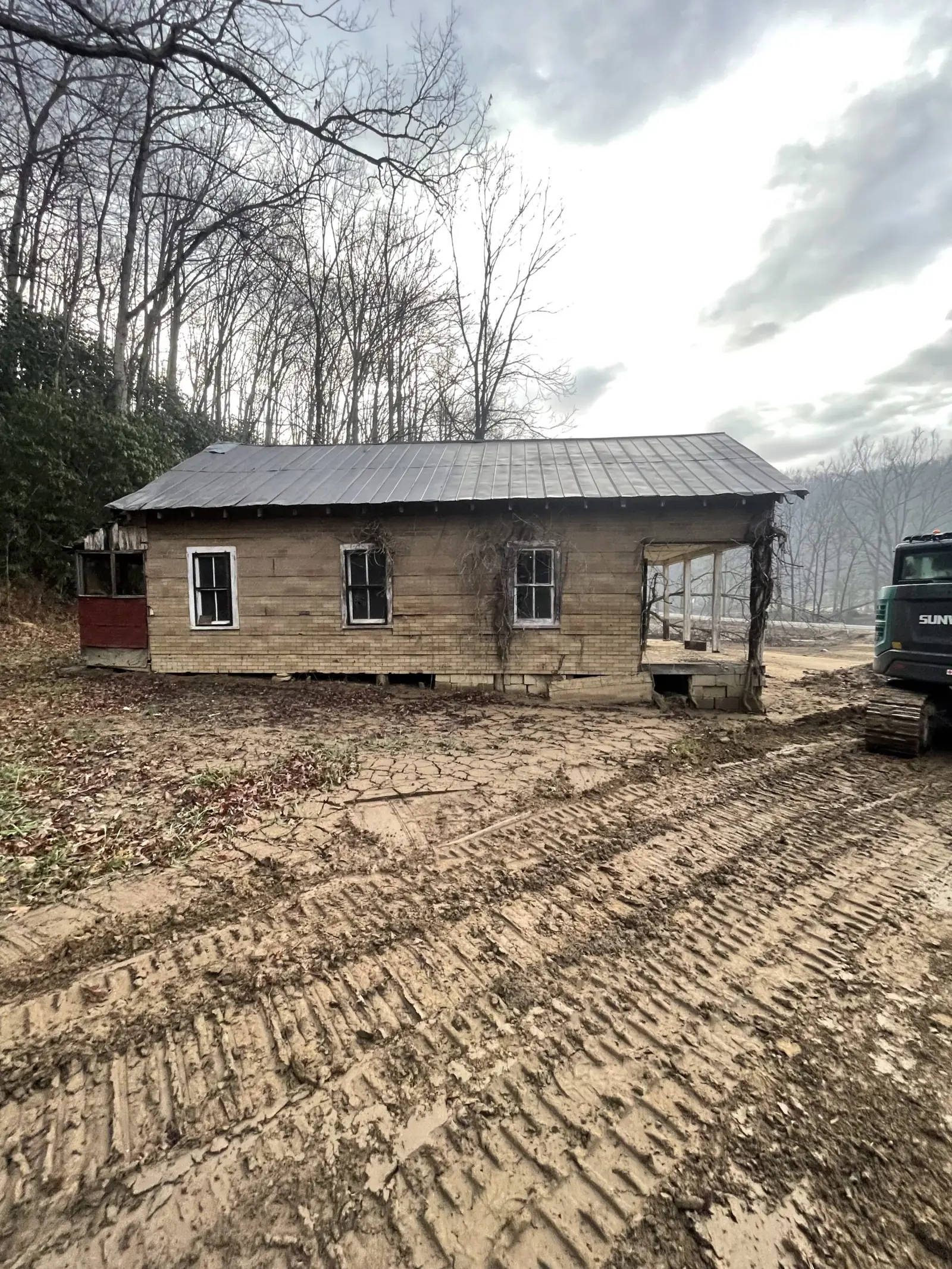
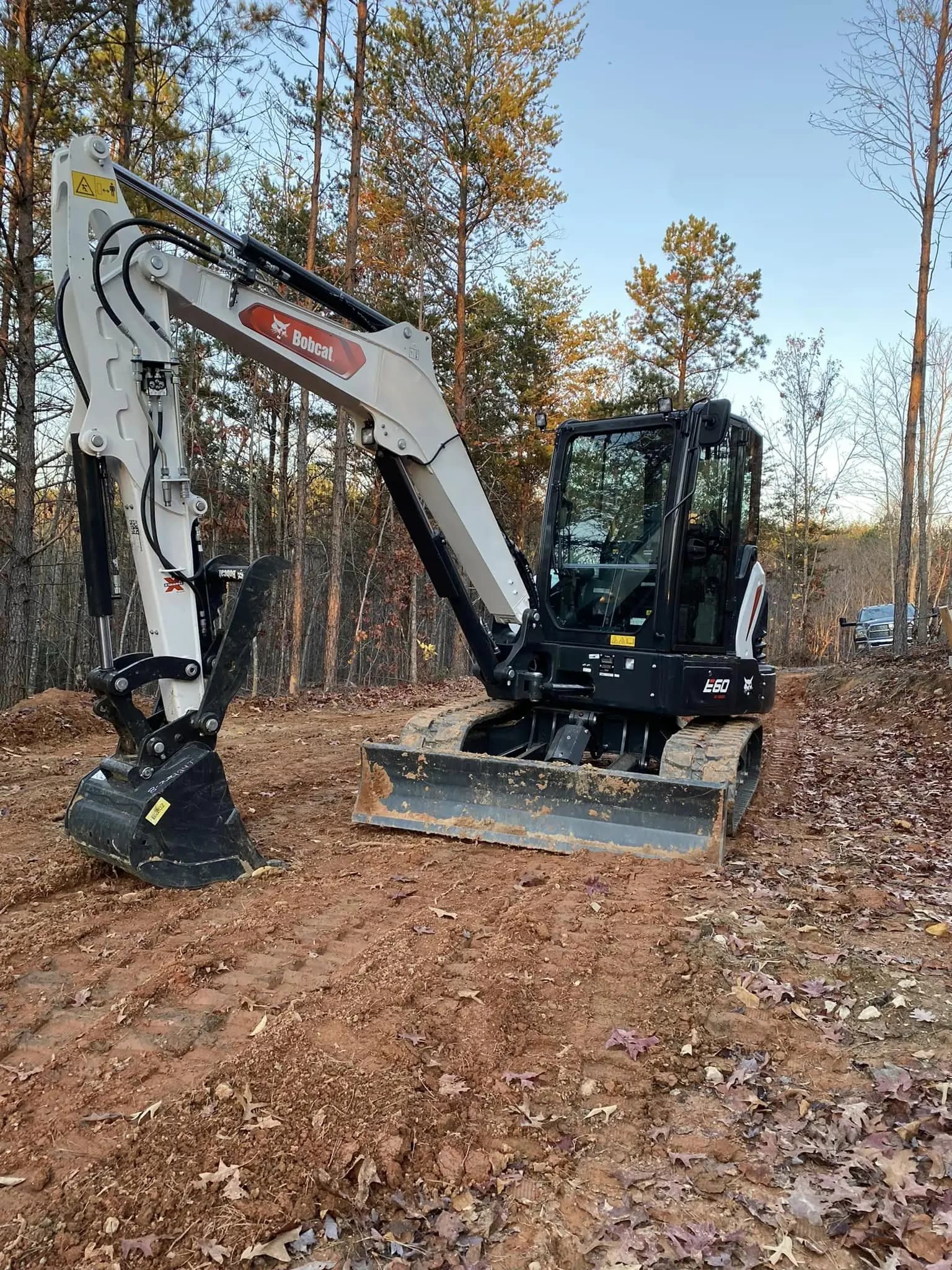
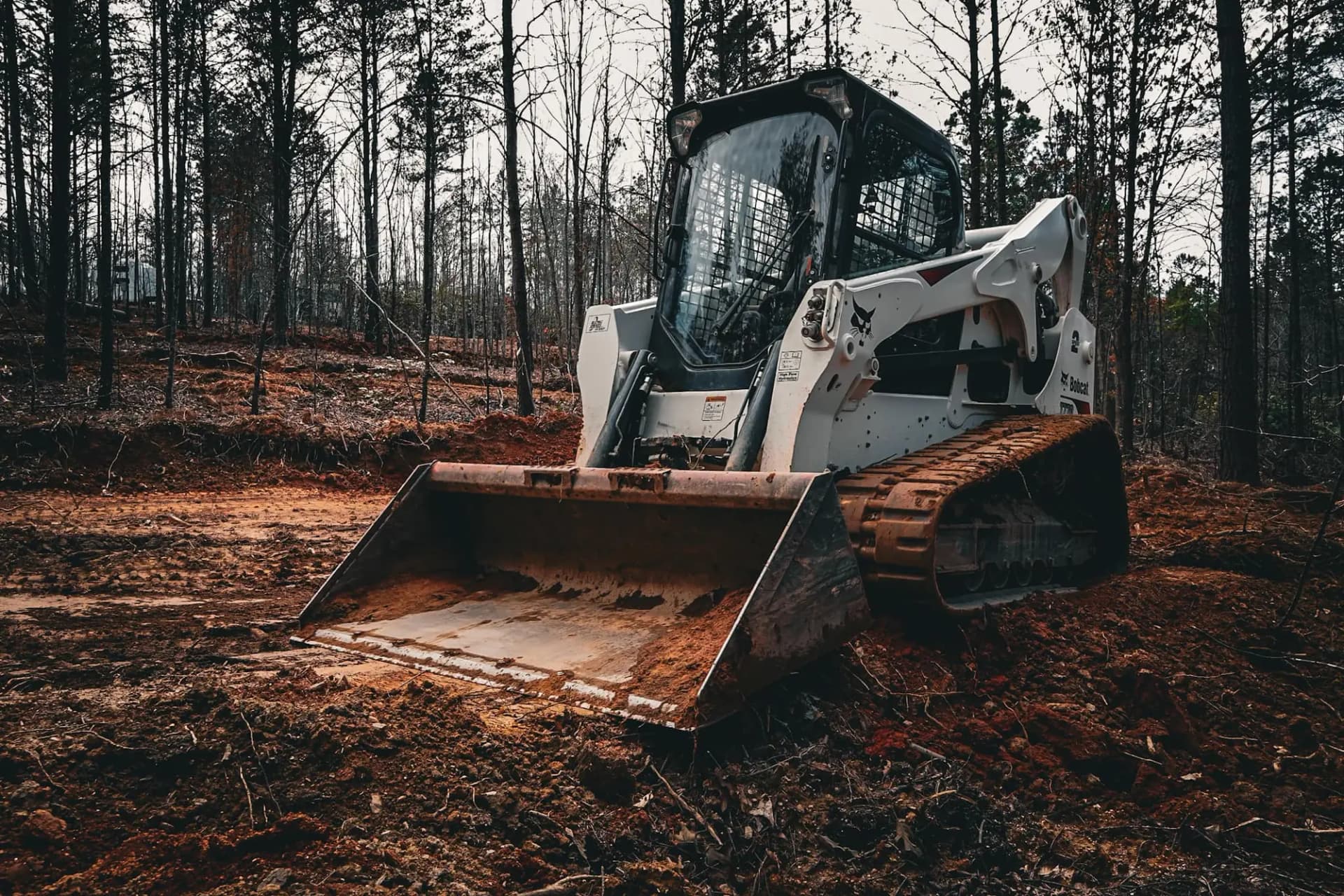
Photos from our own job sites across Western North Carolina.
Service area
Grading across Western North Carolina
We handle grading and land leveling in these markets. Each page covers the terrain, soils and county rules where you are.
- Grading in Asheville, NC
- Grading in Morganton, NC
- Grading in Union Mills, NC
- Grading in Marion, NC
- Grading in Black Mountain, NC
- Grading in Rutherfordton, NC
- Grading in Forest City, NC
- Grading in Valdese, NC
- Grading in Hickory, NC
- Grading in Lenoir, NC
- Grading in Bostic, NC
Outside these towns? See the full service area — and call anyway if you are just past the edge of it.
Answers
Grading questions
How much does it cost to grade a driveway or lot in NC?
Regrading an existing gravel drive usually runs $600 to $2,500, depending on length, how much stone it needs, and whether drainage needs correcting too. A residential building pad is more like $1,500 to $6,000. Major cut and fill, rock removal, or a long haul push both numbers up. We price off a site visit, not a phone guess.
What is the difference between rough grading and finish grading?
Rough grading is the bulk work: moving material, setting the general shape and slope, making the land buildable in the first place. Finish grading is the last pass, bringing the surface to tight elevations so whatever sits on top of it, concrete or gravel or sod, actually sits true. Most jobs need both.
How do I know if my yard needs regrading?
Water that's still standing a day after rain. Mulch or gravel washing out in the same spot, storm after storm. A damp crawlspace or basement wall. Erosion cutting channels across the yard. Ground that's settled enough it now falls toward the house instead of away from it. Any of those is worth a look.
What slope should a graded yard have away from the house?
A common rule of thumb is about six inches of fall over the first ten feet away from the foundation, roughly five percent. Beyond that, one to two percent is usually enough to keep water moving. On the sloped lots we see a lot of around here, that water often needs a swale or a drain to carry it somewhere safe once it leaves the house.
How soon after grading can I pour concrete or lay gravel?
Usually right away, as long as the subgrade's compacted properly and isn't saturated. We compact as we go for exactly that reason. If it's wet from recent rain, giving it a day or two to dry beats pouring over soft clay every time.
Related
Other work we handle
Most projects touch more than one of these. Doing them with one crew keeps the grades, the drainage and the schedule consistent.
Excavation
Land clearing, grading and site prep for residential and commercial projects across the foothills.
ViewDriveway Repair
Washed out, rutted, potholed or draining wrong — we rebuild gravel driveways so they shed water and stay put.
ViewErosion Control
Is rain washing away your property? Culverts, ditches, swales, riprap and resloping that send water where it belongs.
ViewConcrete
Driveways, slabs, foundations, walkways and repair — poured on a base that will hold them.
ViewNeed grading done right?
Call (828) 375-7556 or send us the details and we will get out to look at it.