
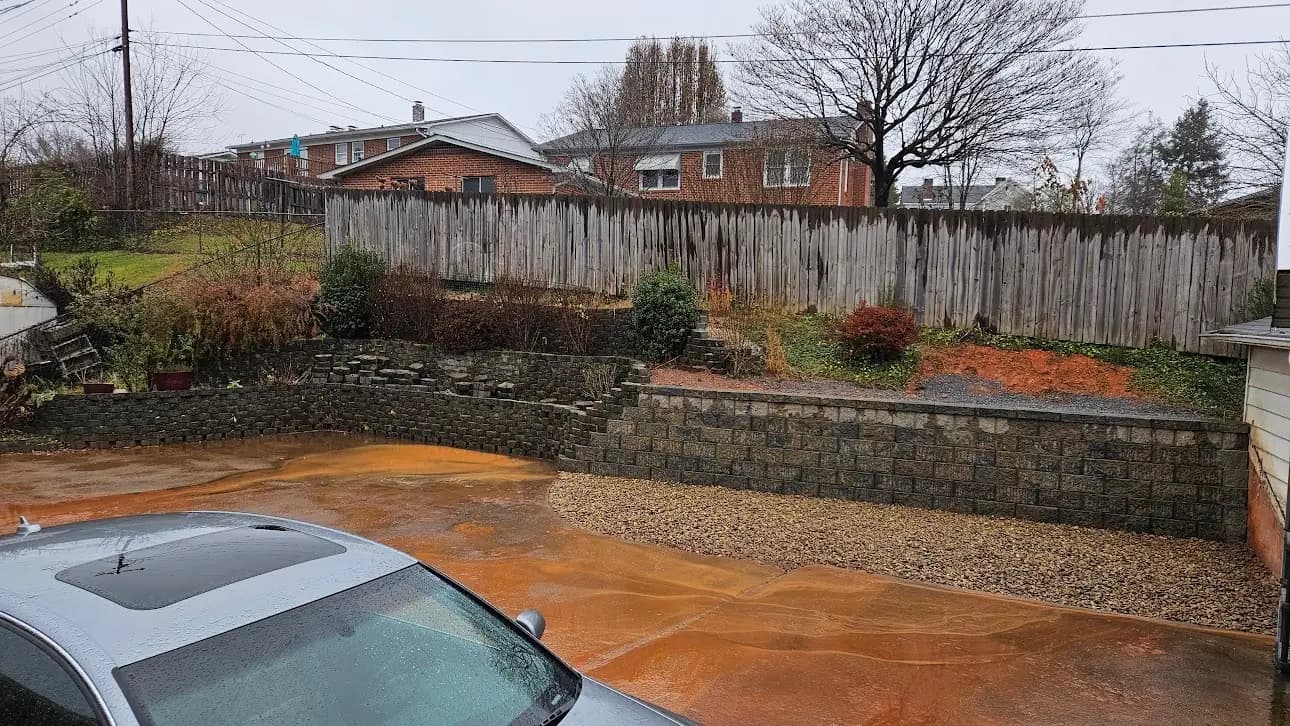
Gravel driveways do not fail suddenly. They give you warning for a year or two, and the cost of the fix roughly doubles at each stage you ignore. Here is what to watch for.
1. Water stands on the surface after rain
A properly crowned driveway sheds water within minutes of the rain stopping. If puddles are still there hours later, the crown is gone and the surface has gone flat or concave. Every one of those puddles is softening the base underneath it.
2. Ruts are forming in the wheel tracks
Ruts start as slight depressions where tires run. Once they are deep enough to channel water, they stop being a cosmetic problem and become a drainage problem — the ruts now carry water down the drive, which cuts them deeper, which carries more water.
3. Gravel is piling up at the bottom of the hill
If there is a fan of stone where your drive meets the road or levels out, that is your driveway surface, relocated. Stone does not migrate on its own — it goes where the water took it. This is the clearest possible sign that water is running the length of the drive.
4. Potholes come back weeks after you fill them
Throwing loose stone in a hole is not a repair — with no compaction and no fix for whatever created the low spot, traffic pushes the stone out and the hole returns. Recurring potholes in the same places mean the base beneath them has failed or water is collecting there.
5. The driveway sits lower than the ground beside it
A drive that has cut down below the surrounding grade has become a channel. Water from the yard, the bank and the road all runs into it now, and no amount of surface stone will fix that until the drive is raised or the water is intercepted.
6. The ditch is full or gone
Ditches silt in and grow over. Once the ditch is level with the driveway, it is not carrying anything. Re-cutting a ditch is inexpensive maintenance and it is the single highest-value thing you can do for a driveway on a grade.
7. Soft or muddy spots that never dry out
A section that stays soft long after the rest has dried usually means water is coming up from below — a spring, a seep, or groundwater held by the clay — rather than sitting on top. That needs subsurface drainage and stone, not more surface gravel.
What it costs to wait
| Stage | What it needs | Typical cost |
|---|---|---|
| Crown flattening, minor ruts | Regrade and re-crown | $600 – $1,500 |
| Ruts and thin surface | Regrade plus stone | $1,500 – $3,500 |
| Washing, gravel migrating | Regrade, stone, ditch work | $2,500 – $6,000 |
| Base failed, drive sunken | Full rebuild | $4,000 – $12,000+ |