
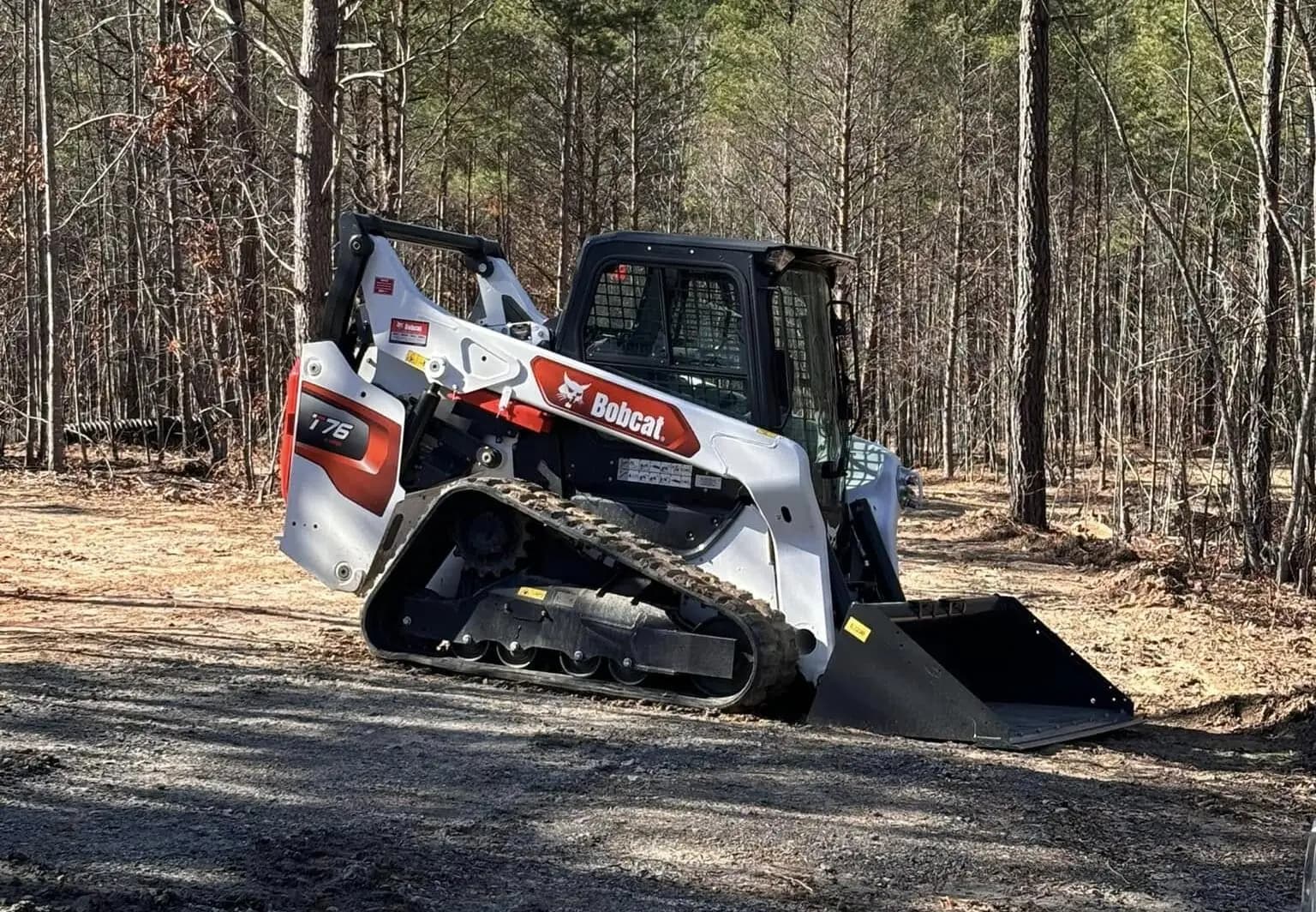
Grading and re-crowning an existing gravel driveway in Western North Carolina typically runs $600 to $2,000. Add fresh stone and most jobs land between $1,200 and $4,000. A long, steep drive that also needs ditching and a culvert can run $4,000 to $10,000 or more.
That is a wide spread, and the reason is simple: half of these jobs are maintenance and half are repairs to a drainage problem that has been eating the driveway for years. Which one you have determines the price.
What the work costs
| Work | Typical range | Notes |
|---|---|---|
| Grading & re-crowning only | $600 – $2,000 | Existing base still sound |
| Grading plus fresh stone | $1,200 – $4,000 | Most common repair |
| Pothole & low-spot repair | $400 – $1,200 | Spot work, compacted fill |
| Ditch cutting or reopening | $500 – $2,000 | Per side, length-dependent |
| Driveway culvert installed | $1,500 – $4,000 | Includes headwall & outlet protection |
| Full rebuild (base gone) | $4,000 – $12,000+ | Re-cut, base stone, surface stone |
| New gravel driveway | $8 – $20 per linear foot | Width and cut depth dependent |
How much gravel do you actually need?
Rough arithmetic that gets you close enough to sanity-check a quote. Crusher run weighs roughly 1.4 tons per cubic yard compacted.
- Length in feet × width in feet = square feet.
- Multiply by the depth you want in feet (3 inches = 0.25, 4 inches = 0.33).
- Divide by 27 to get cubic yards.
- Multiply by 1.4 to get tons.
A 300-foot drive at 12 feet wide with 3 inches of new stone works out to about 900 square feet of coverage per inch, roughly 33 cubic yards, or about 46 tons. Delivered and spread crusher run generally runs $30 to $55 per ton in this region depending on how far you are from the quarry.
Crown, ditch, culvert: the three things that matter
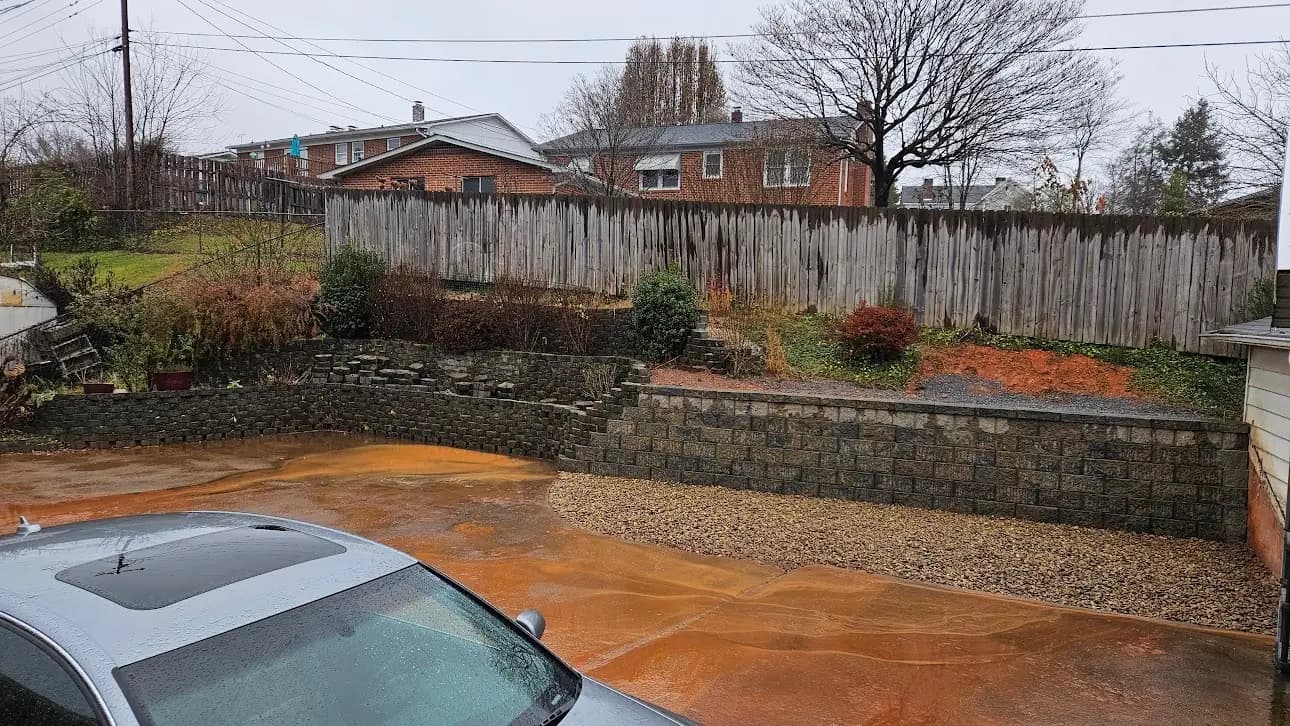
Almost every failing gravel driveway in these counties is failing for the same reason — water is running along the drive instead of across and off it. Once water runs the length of a driveway, it picks up speed, and moving water carries gravel away. You can buy stone every year forever, or you can fix the three things that keep water off the surface.
Crown
The driveway surface should be slightly higher in the middle so water sheds to both sides. A useful target is about a half inch of rise per foot of half-width — on a 12-foot drive, roughly 3 inches higher at the center than at the edges. Crown flattens out with traffic and needs re-establishing periodically. On a side-hill cut, an in-slope toward a single ditch is often better than a crown.
Ditch
Water shed off the driveway has to go somewhere. A ditch alongside carries it downhill in a controlled channel. Ditches silt in and grow over, which is why re-cutting them is routine maintenance rather than a one-time build.
Culverts and water bars
On a long or steep drive, water has to be taken across and off at intervals before it gains enough volume and speed to cut. That means cross culverts, or water bars — a shallow diagonal berm and channel that diverts flow off the side. A steep drive without them will erode no matter how much stone you put on it.
What stone to use
- Crusher run (ABC): the standard surface here. A mix of stone and fines that compacts into a firm, bound surface that holds on grade.
- #57 washed stone: drains beautifully and looks clean, but the uniform round-ish stone rolls and migrates. It is poor on any slope.
- #4 or larger base stone: used underneath as a base course on soft ground or a steep rebuild, then topped with crusher run.
- Screenings / dust: too fine to be a surface on its own; it turns slick and washes.
On the clay subgrade common throughout this region, geotextile fabric between the soil and the base stone is worth its cost on soft sections. Without it, the stone gets pushed down into the clay and disappears.
When it needs a rebuild instead of a grade
- The drive sits below the surrounding ground and holds water rather than shedding it.
- Grading exposes soft subgrade or bedrock rather than a stone base.
- Ruts return within weeks of every regrade.
- There is no ditch and no room to cut one without moving the drive.